

How much water do you really need each day?
Is eight glasses right for everyone? What health authorities actually recommend, what raises your needs, and simple ways to tell you are drinking enough.
You know you should drink more but keep forgetting? Eight simple habits that tie water to your daily routine until drinking it becomes automatic.

For most of us the problem isn't knowing that water matters. It's that we forget. The day gets busy, and by the evening we realise we've had two glasses. The answer isn't more willpower; it's small habits that make drinking happen almost on its own. Here are eight you can start today.
After a night's sleep your body has gone hours without a drink. Keep a glass or bottle by your bed and finish it before your coffee. This one habit guarantees a good start every single day.

The easiest way to build a new habit is to stack it on an old one. For example:
A glass before every meal.
A glass each time you get back to your desk.
A glass after you brush your teeth.
You no longer have to "remember": the old habit reminds you.
What you see, you drink. A clear bottle on your desk or in your car is a constant cue. Pick one with time or volume markings and you can watch your progress through the day.
Two litres sounds like a lot, but eight glasses across twelve waking hours is about one glass every ninety minutes. Split your goal into parts of the day: some before noon, some in the afternoon, some in the evening.
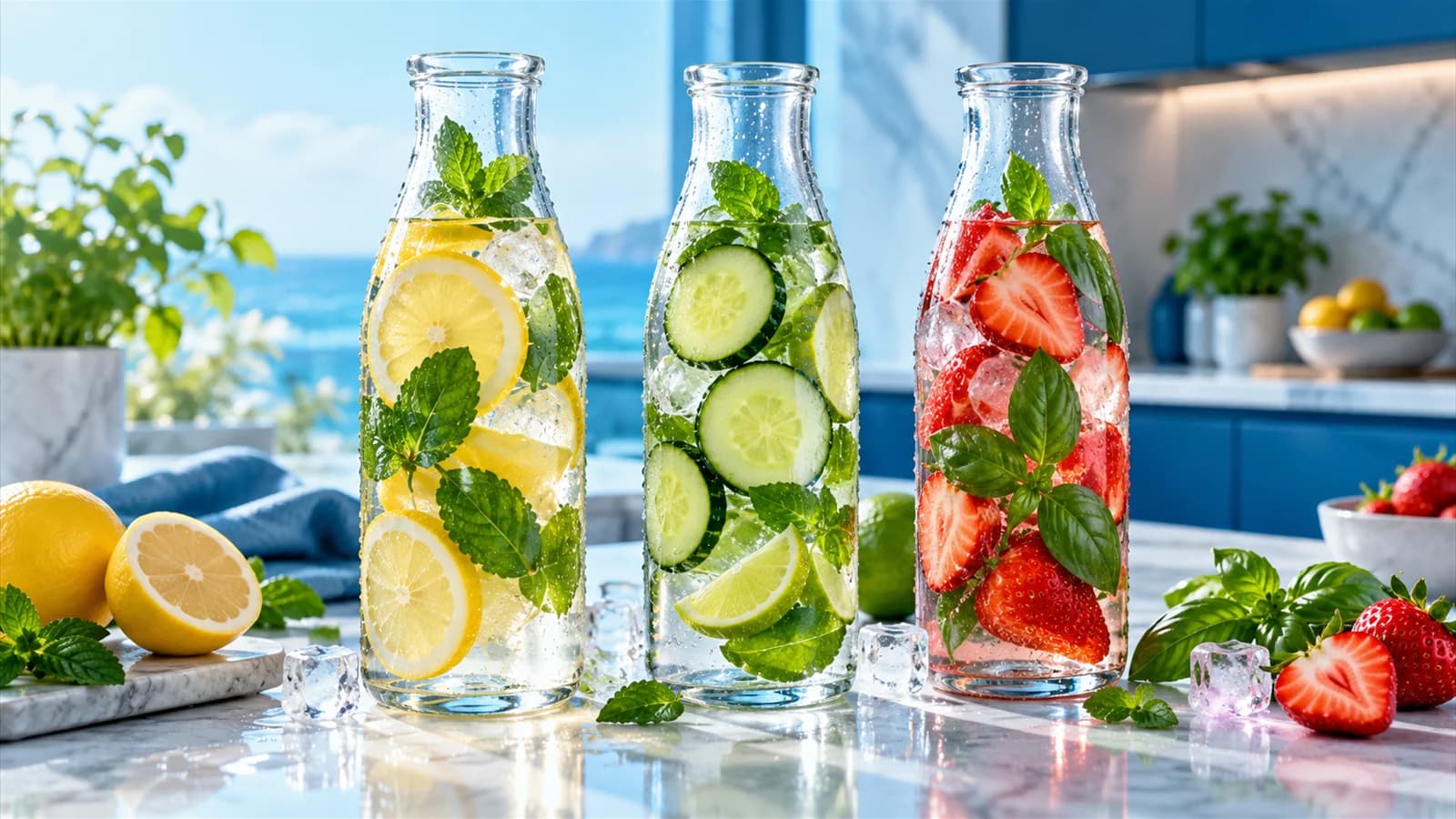
If plain water bores you, add slices of lemon or cucumber, a few mint leaves or some berries. A light, natural flavour with no added sugar can be the difference between a glass you drink and one you leave.
Watermelon, cucumber, oranges, strawberries, lettuce and soups are all rich in water. Adding them to your meals raises your hydration without you noticing.
A fixed alarm every hour gets ignored within two days. A better reminder knows when you wake up and when you sleep, and stays quiet if you've just had a drink. In Water Tracker you set your daily hours and choose the tone and sound of your reminders, so they arrive when they actually help.
What gets measured gets better. Seeing your streak grow, or unlocking a new achievement, tells you your small efforts count. That feeling is what turns an attempt into a habit.
There is no fixed number. Research suggests that a new behaviour can take anywhere from a few weeks to a couple of months or more to become automatic, and it varies from person to person. What matters is not quitting after a missed day: just pick it up again tomorrow.
Don't try all eight at once. Choose two that suit your day, such as the morning glass and water with meals, and stick with them for a week. Then add another. Small, steady change always beats a big burst of enthusiasm that fades.
There is no strong evidence that drinking water with meals harms digestion in healthy people, and it may even help you feel full.
Rely on habits and reminders rather than thirst alone, and use urine colour as a simple check on your hydration.

Is eight glasses right for everyone? What health authorities actually recommend, what raises your needs, and simple ways to tell you are drinking enough.